Conversations reporting
Use the built-in Conversations report template to track conversation volume, replies, closures, channels, and your busiest hours in Featurebase.
Written By Markus Palm
Last updated 8 days ago
Overview
The ‘Conversations’ template gives you a ready-made view of your conversation volume and how your team keeps up with it:
How many conversations start
How many conversations get replied to and closed
Which channels they arrive through
When they arrive
And much more
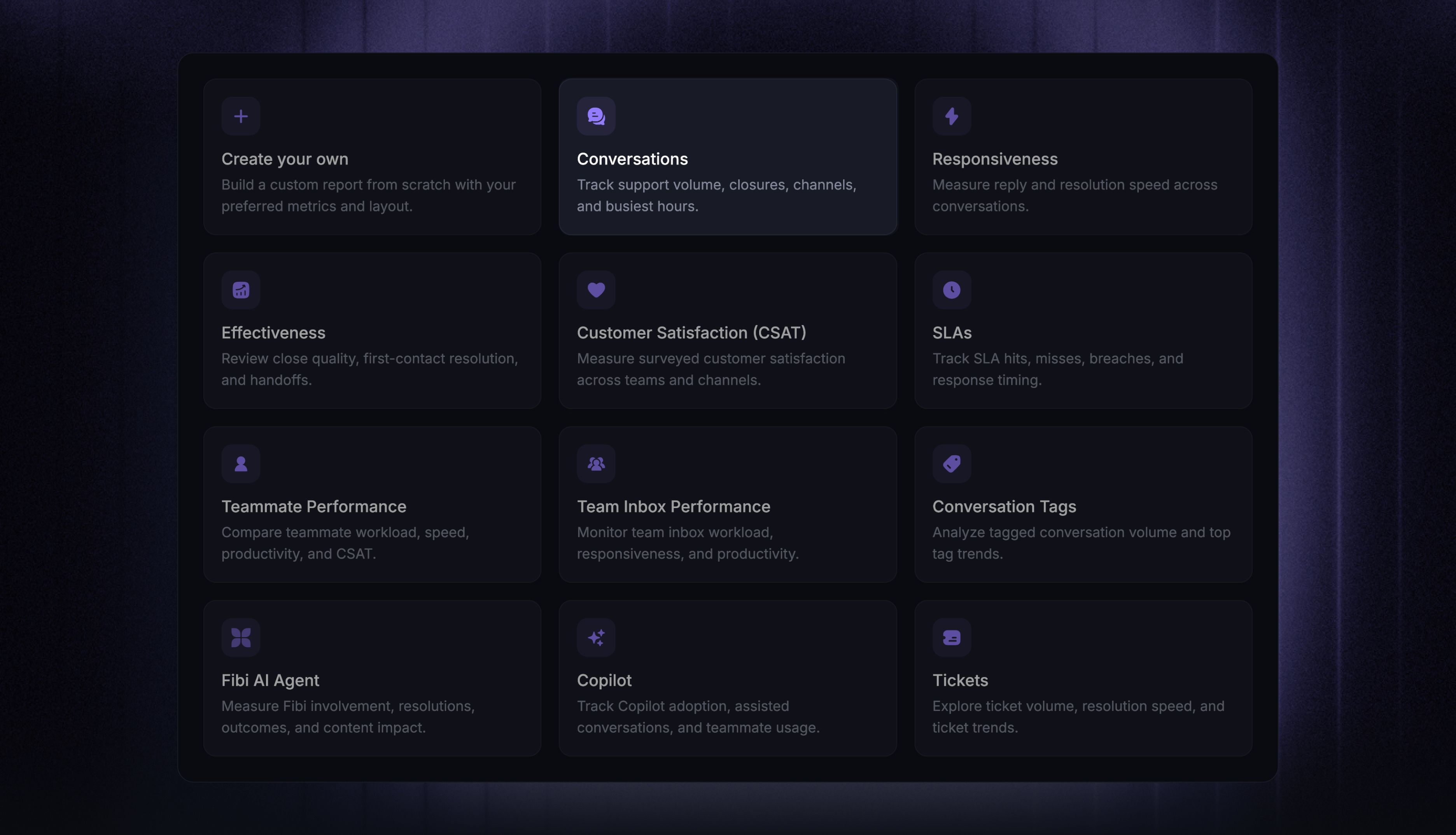
Go to the Reports tab and create a new report. Select the ‘Conversations’ template to get started quickly.
Note: You can also combine reporting metrics and attributes to create your own custom report.
What the template shows
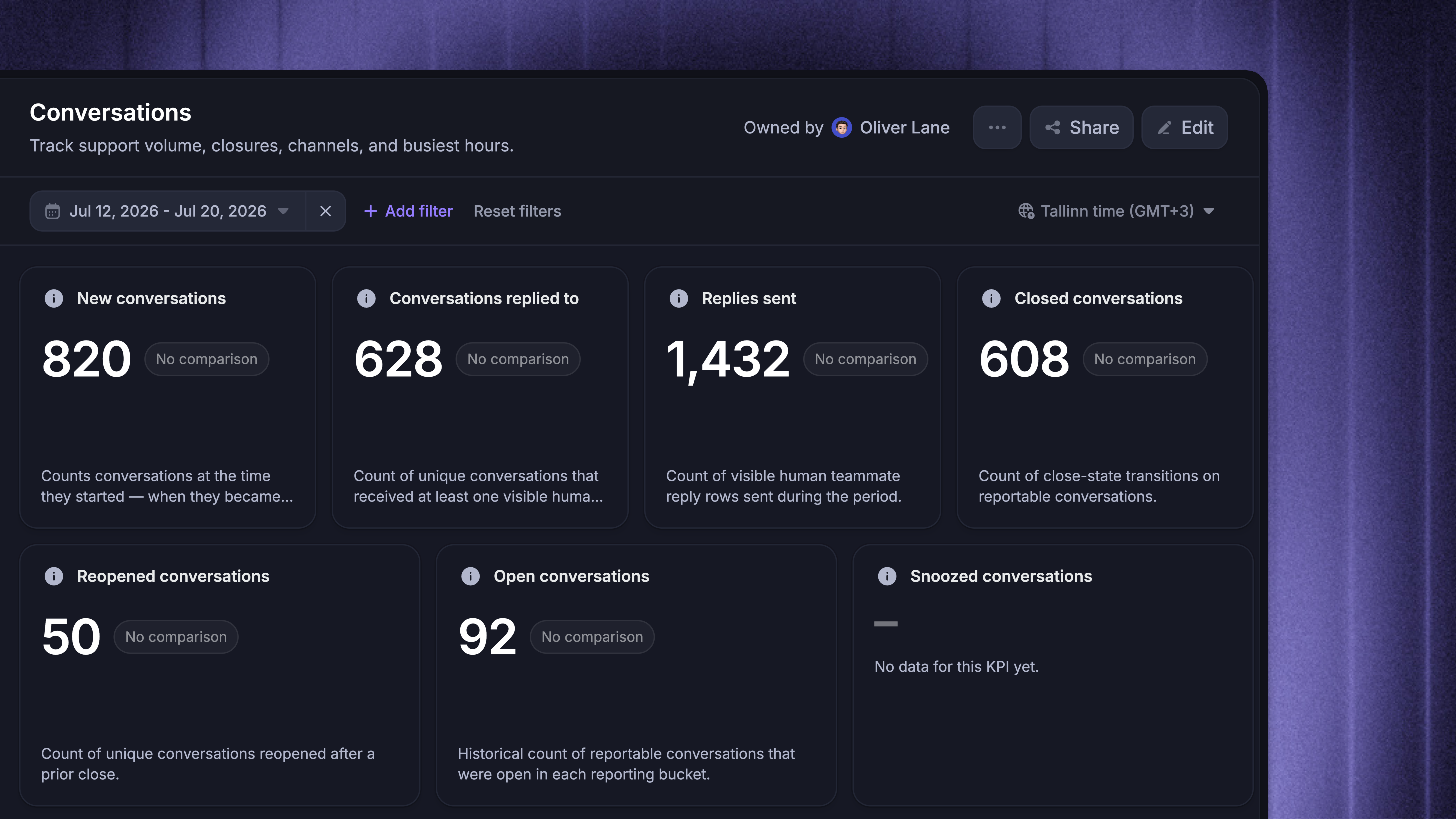
The report opens with key metric tiles, each compared with the previous period:
Conversation volume - New conversations that received a teammate reply, and replies sent
Closures and workload - Close and reopen activity, plus the conversations that sat open or snoozed
Read these two metrics differently:
‘New conversations’ - every conversation created in the period, even if it never received a reply or was started by Outbound messages or Workflows
‘Closed conversations’ - close events, so a conversation that closes, reopens, and closes again counts twice
Note: Response and resolution metrics can use narrower eligible populations than ‘New conversations’.
Customize this report
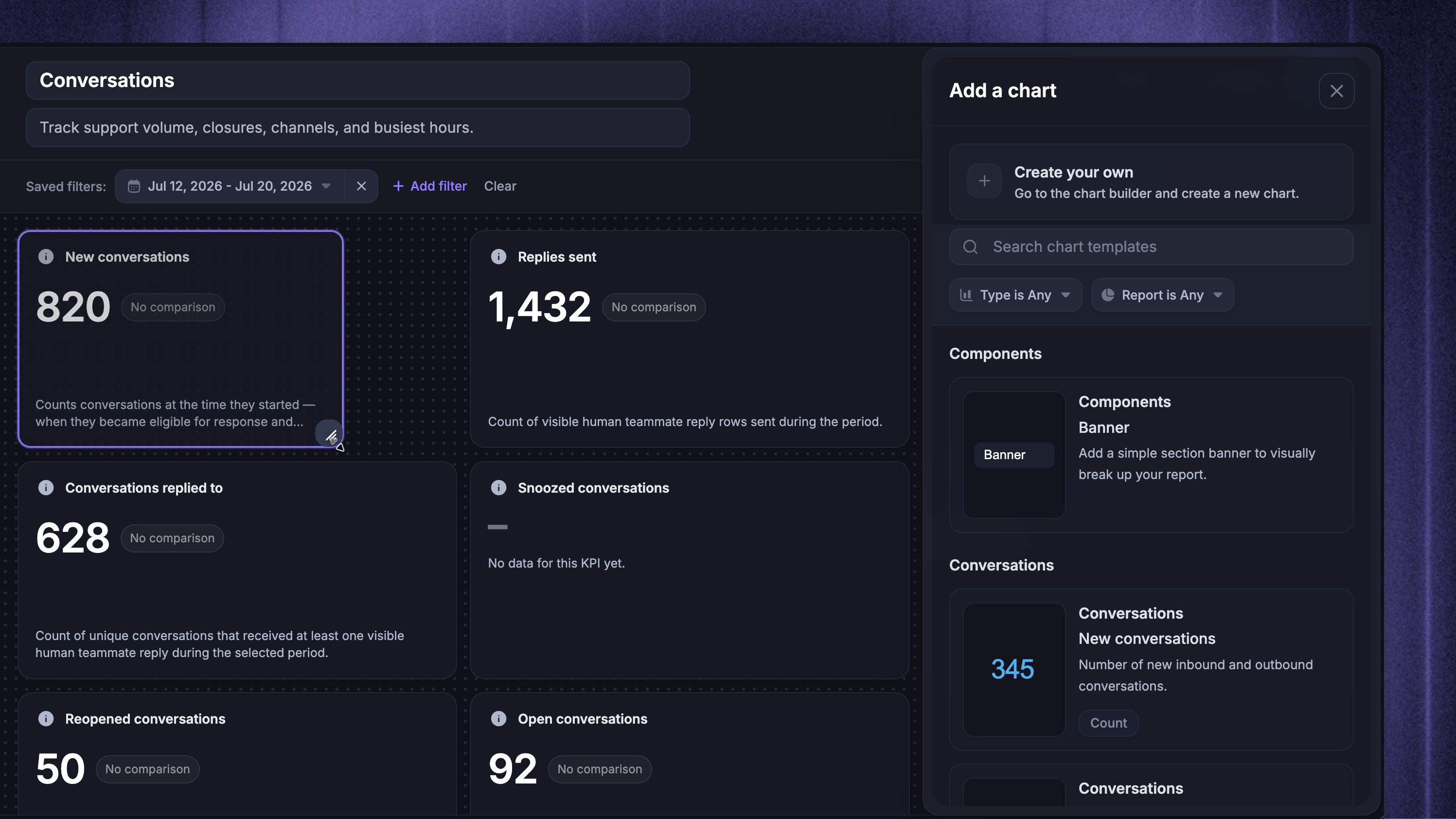
Your copy of the template is a normal custom report: rename, remove, or reconfigure any chart, or add your own. The Add a chart panel includes more prebuilt conversation charts, such as ‘New inbound conversations’, which counts only conversations started by customers or leads.
Useful filters for this template:
Channel or Conversation tag - focus the whole report on one channel or a tagged subset
Country or Continent - compare volume across customer locations
Conversation origin, Has customer reply, and Conversation initiator type - separate inbound volume from Outbound and Workflow conversations, including ones nobody replied to
Custom attributes - segment conversations using workspace-specific conversation, user, or company data
Teammate - automatically uses the teammate attribution that matches each metric, such as the current assignee for volume and the teammate responsible for a reply or close
Learn more about customizing reports →
Conversations report use cases
Manage your team's workload with the New conversations - by time chart
‘New conversations - by time’ tracks conversation volume so you can spot long-term growth or recurring spikes. It also compares the selected period with the immediately preceding one.
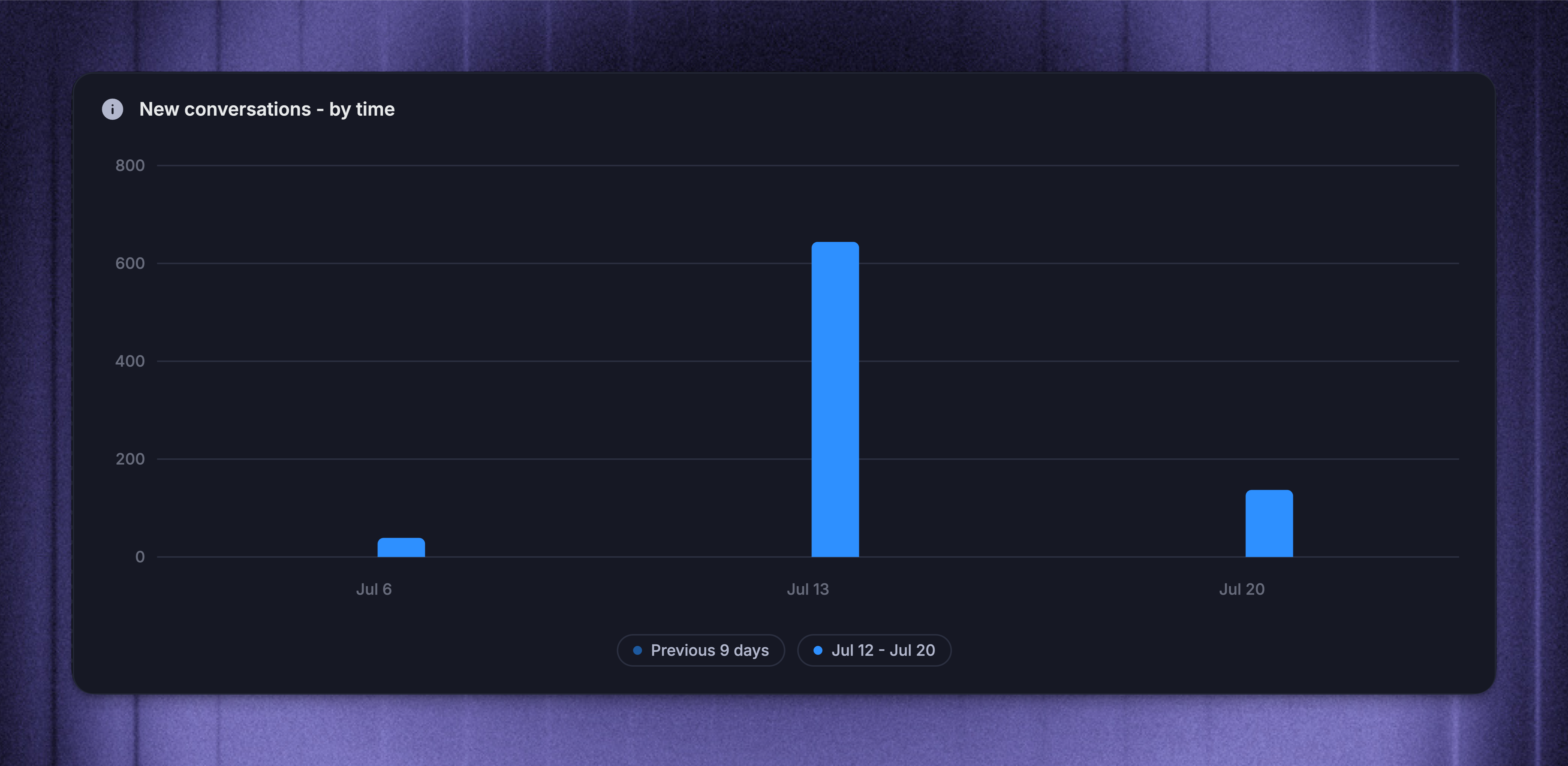
Tip: Select a date range covering a whole number of weeks when you want the same weekdays to line up across both periods.
Understand the rate that conversations are being replied to
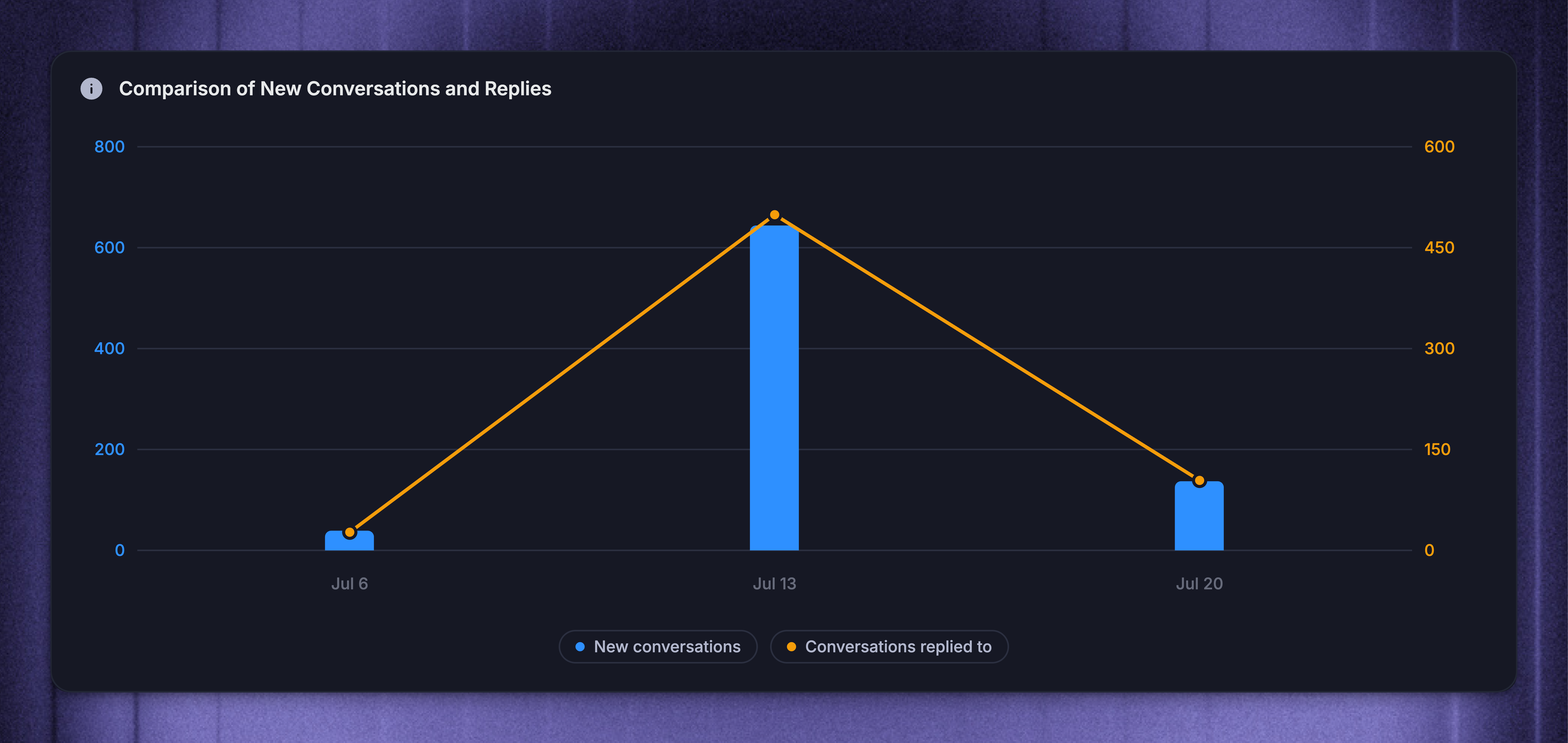
‘Comparison of New Conversations and Replies’ shows new conversations alongside conversations replied to.
Because ‘Conversations replied to’ is counted when a visible teammate reply is sent, it can include conversations created before the selected period.
Fewer replied conversations can indicate a backlog, while more can mean the team is working through older or reopened conversations.
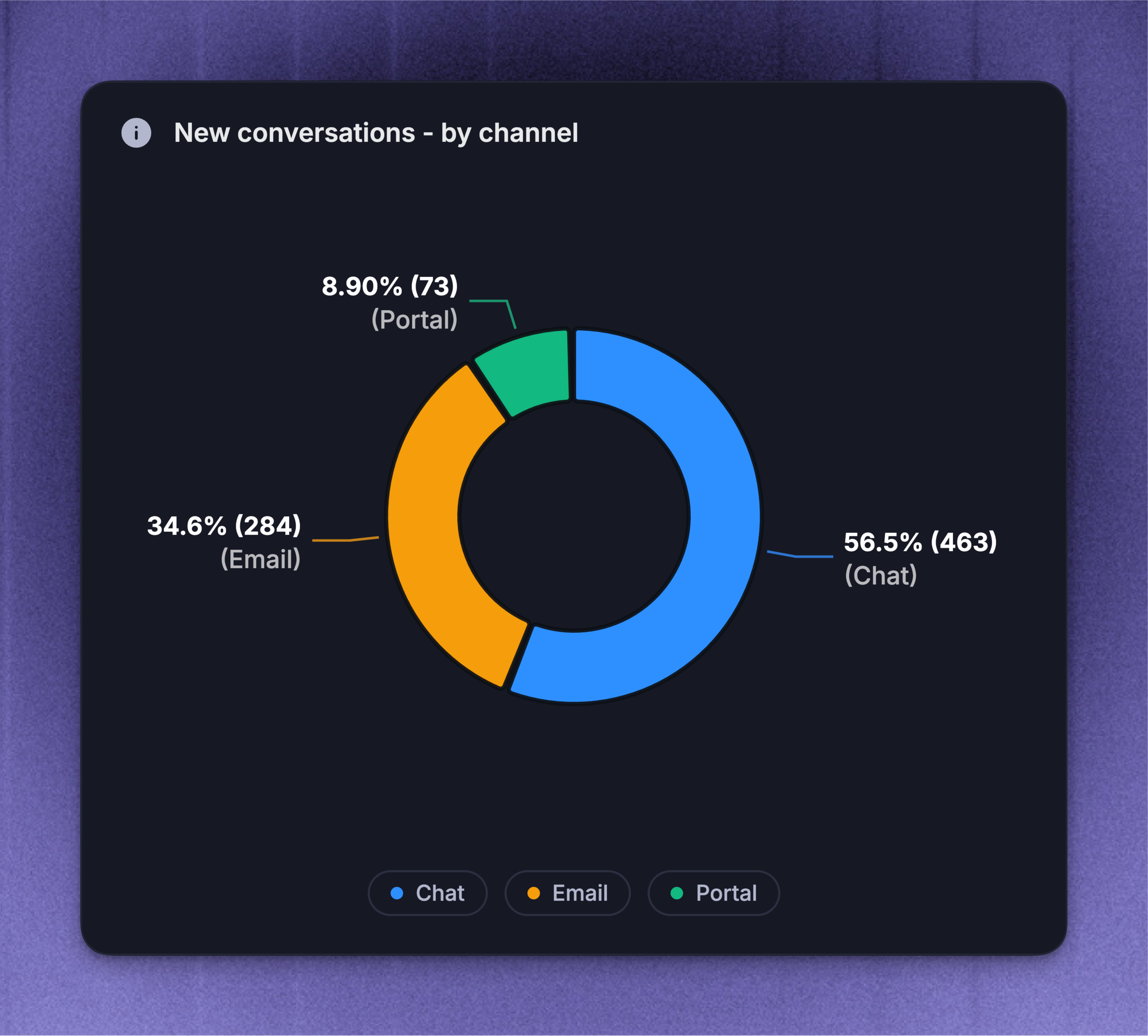
See which channels your conversations are coming from
‘New conversations - by channel’ shows how new conversations are spread across Chat, Email, and Slack. Channels are the different ways that customers can start a conversation with you.
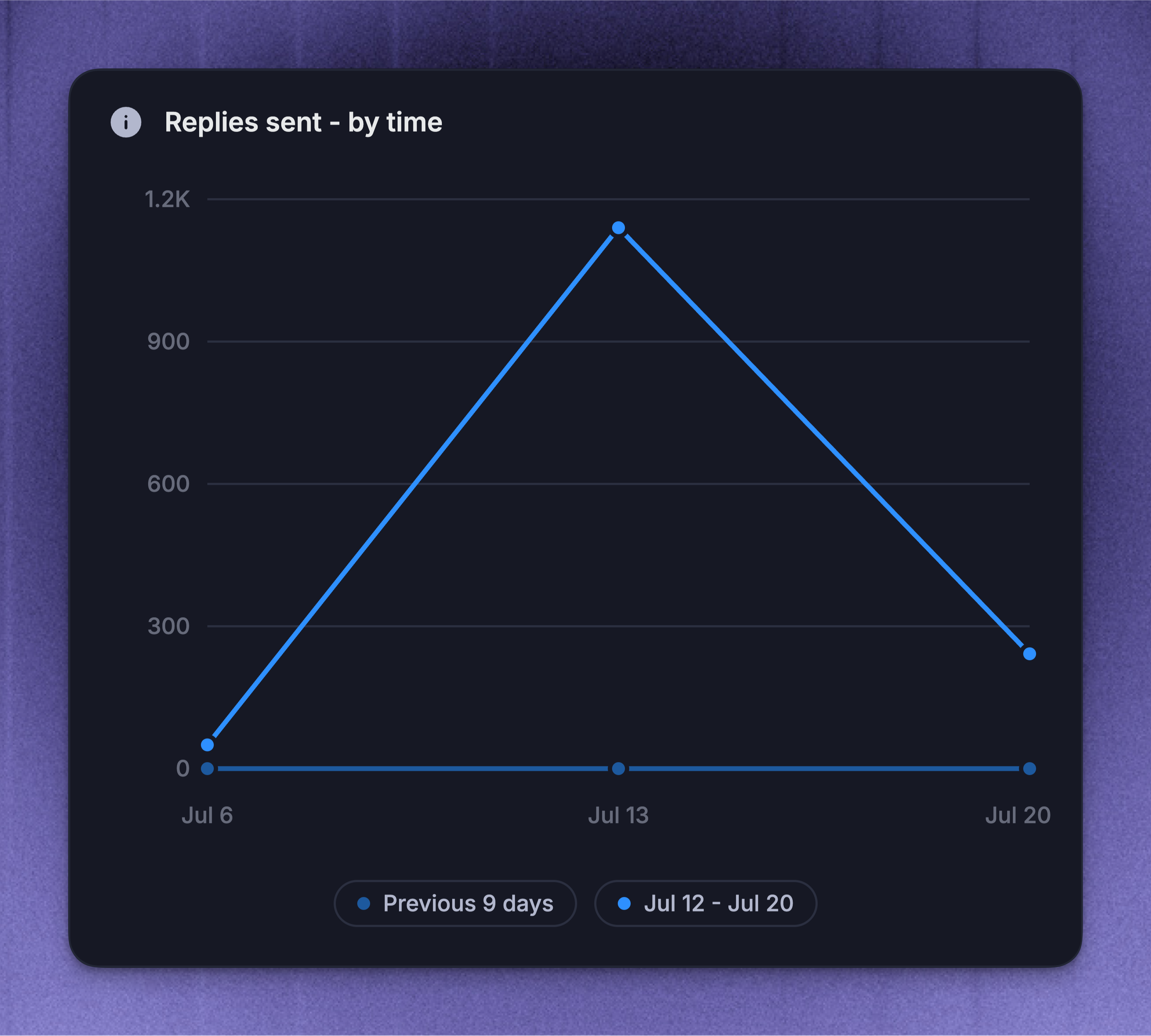
Break down how many replies your team sends
‘Replies sent - by time’ shows how many teammate replies were sent during the selected period.
Compare closes with reopens
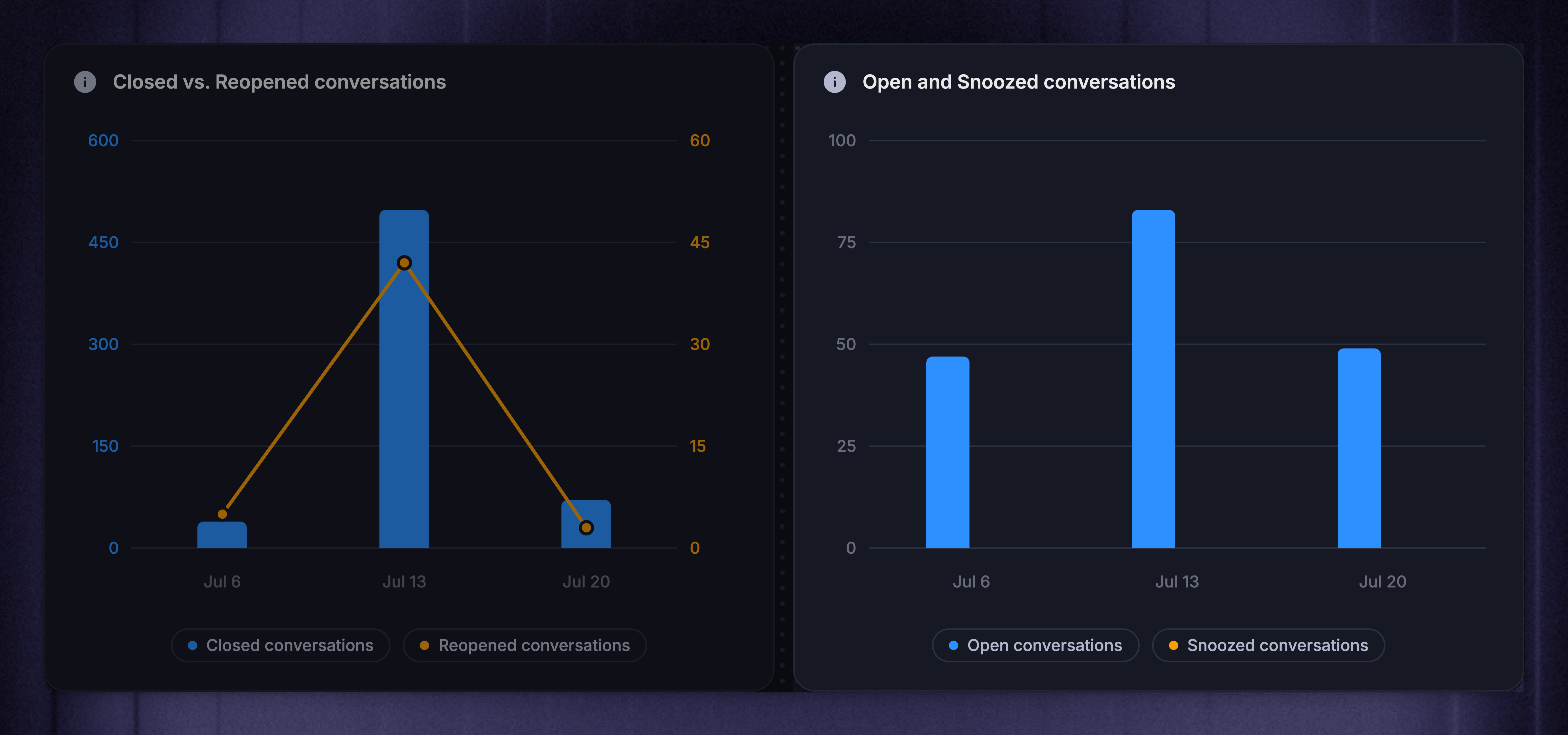
‘Closed vs. Reopened conversations’ plots close events against unique reopened conversations, helping you spot periods when resolved work returns to the queue.
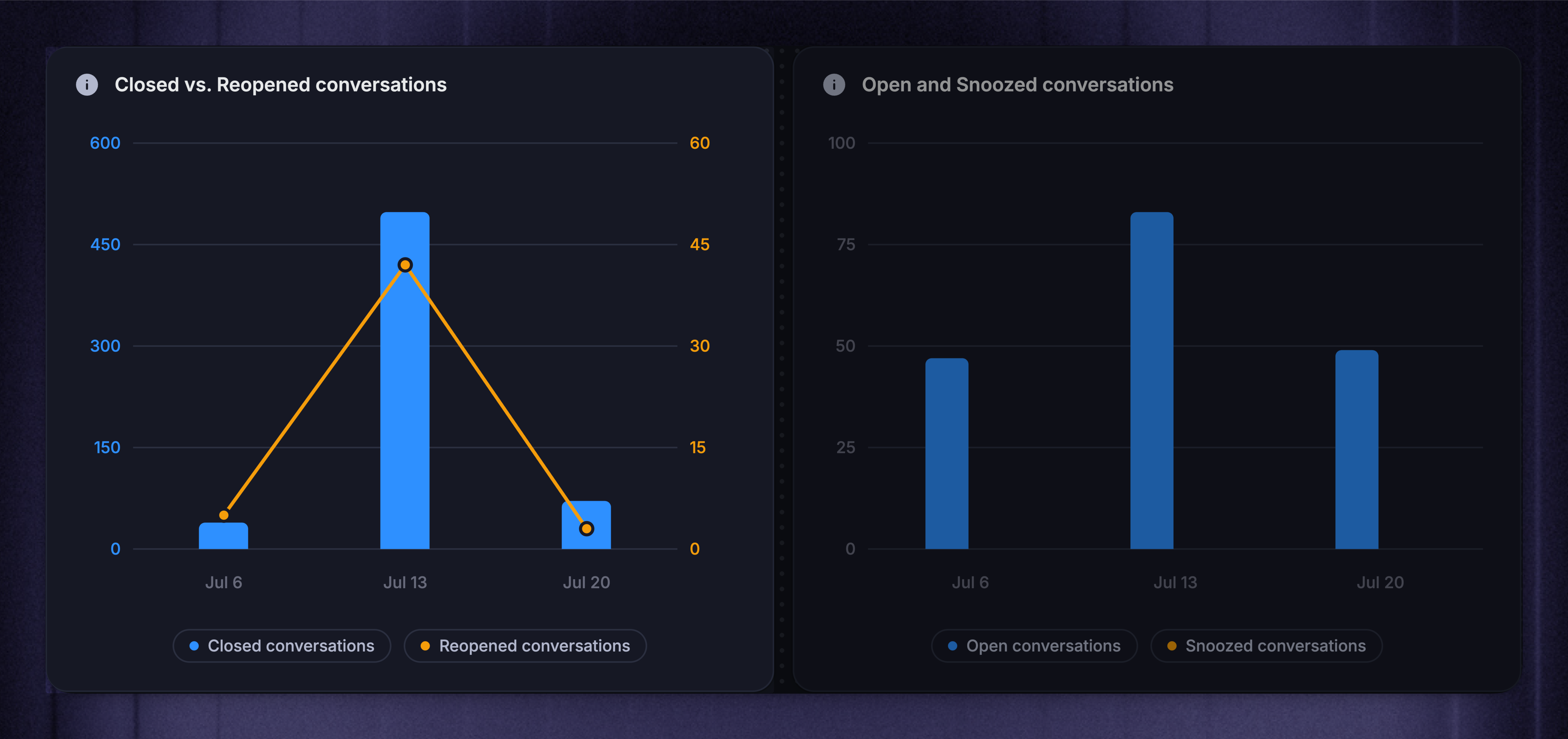
Track the open and snoozed workload
‘Open and Snoozed conversations’ shows how many conversations sat in each state during the period, so you can see whether active or deferred work is building up.
Tackle the busy periods
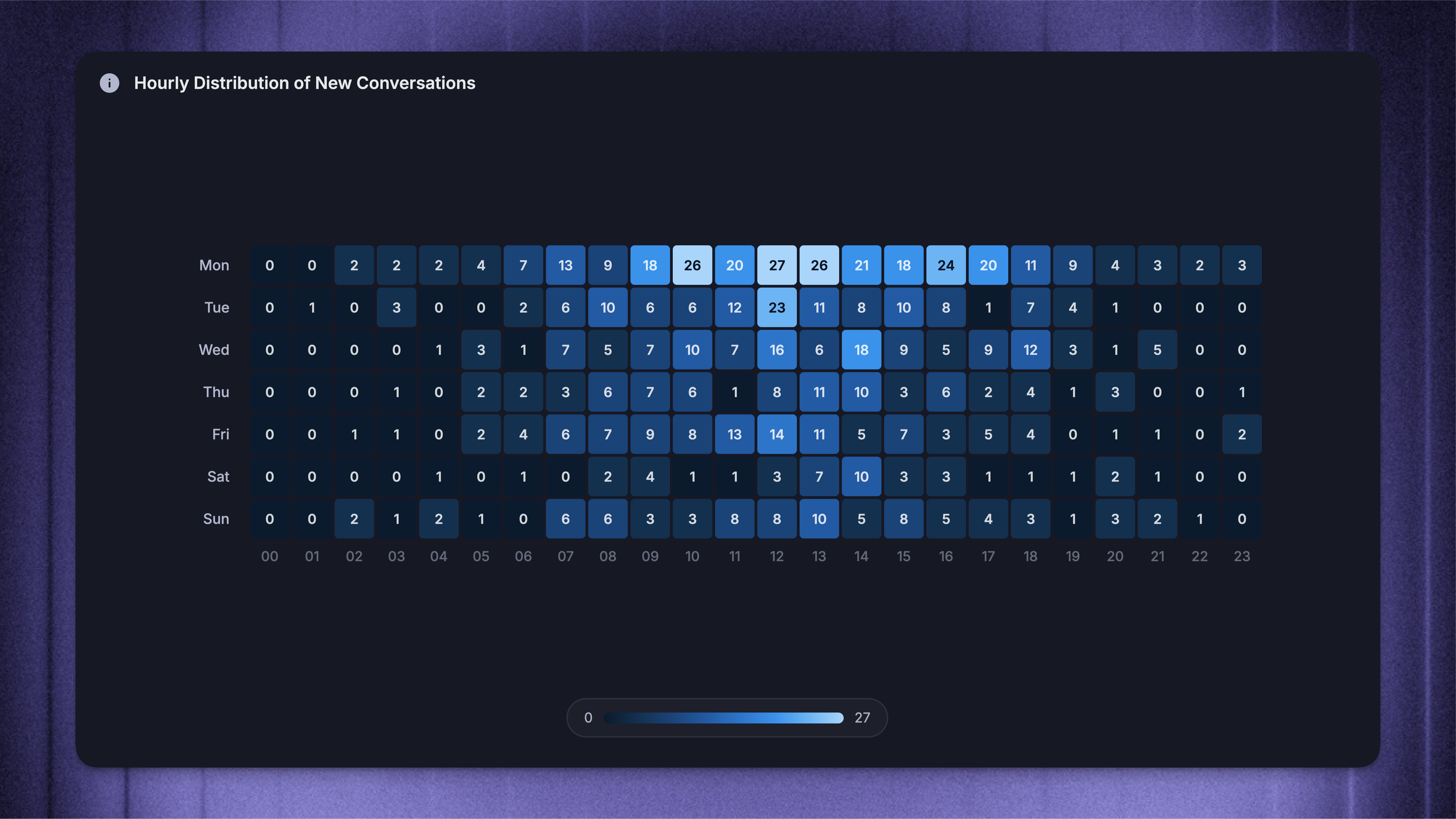
‘Hourly Distribution of New Conversations’ is a heatmap of conversation starts by day of week and hour, so you can find the busy windows and make sure enough teammates are available during them.
FAQs
Why does New conversations show more conversations than my response-time charts?
Why does New conversations show more conversations than my response-time charts?
New conversations counts every conversation created in the period. Response and resolution metrics use narrower populations - first response time, for example, only includes conversations with a visible teammate reply. Troubleshooting custom reports walks through the common cases.
How do I find conversations that never received a reply?
How do I find conversations that never received a reply?
Use one of these approaches:
Add the Conversations with no reply metric, which counts customer-started conversations that closed without any reply from a teammate, Fibi AI Agent, or a Workflow.
You can also compare ‘New conversations’ against ‘Conversations replied to’ - the gap approximates conversations without a teammate reply, since replies can land in a later period than the conversations they answer.
To separate outbound conversations the customer never engaged with, filter by Has customer reply, then use drill-in to list the individual conversations.
Can Closed conversations be higher than New conversations?
Can Closed conversations be higher than New conversations?
Yes. Closes are counted when they happen, so conversations created in an earlier period can close in this one, and every reopen-and-close cycle counts as another close event.
Was this helpful?
Still need help? Ask the team